Deborah Carmel: Dating & Relationship Specialist in Wellington, Florida
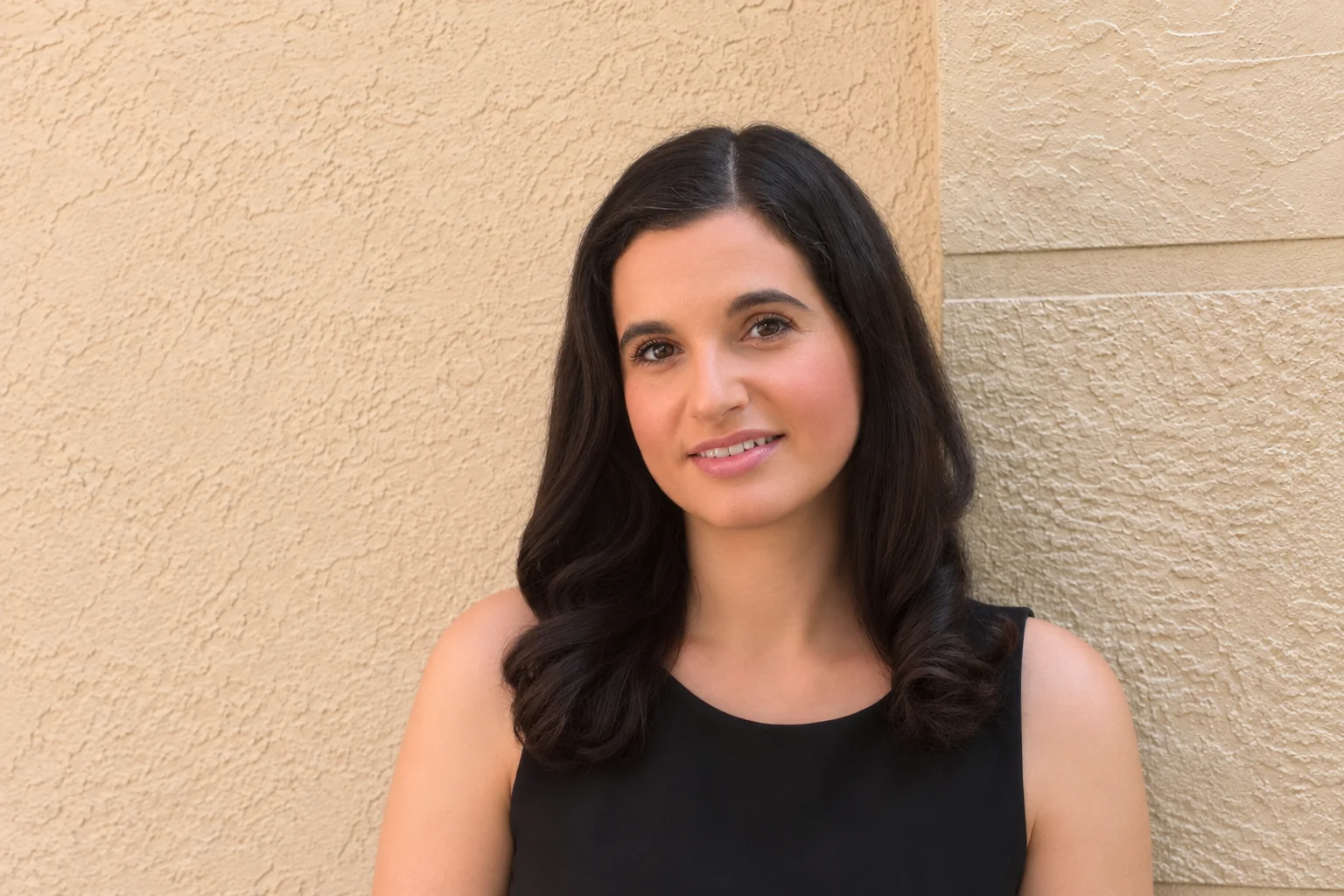
Image provided by Deborah Carmel.
Highlights
- Applied Psychology: Deborah Carmel holds a Master of Science in Applied Psychology from Lynn University, with a background in mixed-methods research.
- Luxury Matchmaking: She has worked as a Luxury Matchmaker and Client Services Specialist, supporting clients in a high-touch and confidential matchmaking environment.
- Dating Psychology: Her areas of interest include attraction, emotional connection, relationship patterns, communication, confidence, and intentional dating.
- Research Meets Real Life: Deborah combines psychological insight with practical experience from matchmaking and dating coaching.
Dating can sometimes feel like a mystery.
Why are we attracted to certain people and not others? Why do some connections develop naturally while others seem to disappear after a promising first date? Why do people sometimes find themselves repeating the same relationship patterns, even when they consciously want something different?
These questions sit at the intersection of psychology and dating — and they are exactly the kinds of questions that interest Deborah Carmel.
With a background in Applied Psychology, luxury matchmaking, client services, and dating coaching, Deborah approaches relationships from both a research-informed and deeply human perspective.
She is interested not only in who people choose, but also in why they make those choices, what they expect from relationships, and how greater self-awareness can change the way they approach dating.
For Deborah, understanding dating is not simply about finding the right person.
It is also about understanding yourself.
Who Is Deborah Carmel?
Deborah Carmel is a Dating Expert with an M.S. in Applied Psychology from Lynn University in Boca Raton, Florida.
Her professional background combines psychology, research, matchmaking, and high-end client services. She has worked as a Luxury Matchmaker and Client Services Specialist at Revolution Dating in Palm Beach Gardens, where she supported clients through a personalized and confidential matchmaking experience.
That experience gave Deborah a close look at the human side of dating.
Matchmaking is not simply about introducing two single people. A successful introduction requires understanding what each person wants, what they value, what they expect from a relationship, and what kind of person might complement their personality and goals.
Deborah's academic background adds another dimension to that experience.
Rather than viewing dating only through the lens of personal preference, she is interested in the psychological patterns that influence attraction, communication, emotional connection, and relationship decisions.
Outside of psychology, dating, and relationships, Deborah has a passion for makeup and beauty. She also enjoys spending time outdoors, kayaking, and discovering new places.
Deborah Carmel — At a Glance
From Applied Psychology to Matchmaking
Psychology and matchmaking may appear to be very different fields.
One often takes place in classrooms, research settings, and academic literature. The other takes place through conversations with real people who are hoping to meet someone special.
For Deborah, the two naturally overlap.
People bring their personalities, expectations, experiences, communication styles, fears, preferences, and relationship histories with them when they begin dating.
Understanding those factors can help explain why dating sometimes feels straightforward — and why it can feel surprisingly complicated at other times.
Deborah's M.S. in Applied Psychology gave her a foundation for exploring human behavior through research and psychological theory. Her experience in matchmaking then provided an opportunity to see how those ideas appear in everyday life.
The result is a perspective that combines research with observation.
Psychology can help us understand patterns.
Dating provides the real-world context in which those patterns become visible.
The Psychology of Attraction
Attraction is one of the most fascinating parts of dating because it is rarely as simple as a checklist.
People may say they want a particular type of partner, only to find themselves attracted to someone who doesn't fit that description.
Physical attraction can matter. So can personality, confidence, shared values, emotional availability, communication style, familiarity, and the way two people make one another feel.
And attraction does not necessarily remain static.
Someone who makes little impression during a first meeting may become more appealing after a second conversation. Someone who creates intense initial chemistry may ultimately prove incompatible with what a person wants from a relationship.
This is one reason Deborah is interested in looking beyond the immediate experience of a date.
The question isn't only:
"Am I attracted to this person?"
It can also be:
"What is creating that attraction?"
And:
"Is this connection aligned with what I actually want?"
Those questions can lead to a deeper understanding of dating behavior and relationship choices.
Why Self-Awareness Matters in Dating
For Deborah, self-awareness is an important part of intentional dating.
Before someone can make good decisions about a relationship, it can help to understand their own values, expectations, communication style, and recurring patterns.
People sometimes enter dating with an idea of what they want without fully understanding why.
They may prioritize certain qualities because they have always considered them important. They may overlook qualities that matter more for long-term compatibility. Or they may repeatedly become attracted to familiar relationship dynamics without realizing that the pattern is repeating.
Self-awareness does not eliminate uncertainty from dating.
It can, however, make uncertainty easier to navigate.
Understanding your own patterns can help you recognize when a dating experience is genuinely aligned with your goals — and when you may simply be repeating something familiar.
Relationship Patterns: What Can Dating Teach Us?
One of Deborah's areas of interest is the connection between dating experiences and relationship patterns.
A difficult date can be frustrating. A promising connection that suddenly ends can be disappointing. A series of similar experiences can be even more confusing.
But dating experiences can also provide information.
They can reveal what someone values.
They can highlight communication habits.
They can show where expectations may be unclear.
And sometimes they can expose patterns that are difficult to recognize while someone is inside them.
This is where reflection can become useful.
Instead of simply asking, "Why does this always happen to me?", a person might ask:
"What is happening repeatedly, and what can I learn from it?"
That shift can turn a disappointing dating experience into an opportunity for greater self-awareness.
What Does a Dating Coach Actually Do?
Dating coaching is sometimes misunderstood.
A dating coach is not there to guarantee that someone will find a partner or provide a formula for making every date successful.
For Deborah, coaching is about creating a structured and supportive environment in which people can examine their dating experiences and make more intentional choices.
Her work has included helping clients with dating goals, relationship patterns, communication, confidence, and expectations for a partner.
That can involve asking questions, identifying recurring themes, clarifying what a client wants, and considering practical changes.
It can also involve the more immediate parts of dating:
- Preparing for a date
- Navigating communication before and after a date
- Understanding a confusing dating experience
- Staying aligned with personal goals
- Managing disappointment after a setback
- Building confidence
- Recognizing recurring relationship patterns
- Clarifying expectations for a potential partner
The objective is not to tell someone exactly what to do.
It is to help them understand their choices more clearly.
Dating Confidence Is More Than Feeling Attractive
Confidence is often discussed in dating as though it means simply feeling attractive or charismatic.
Deborah's approach takes a broader view.
Dating confidence can also mean being comfortable expressing what you want.
It can mean knowing your boundaries.
It can mean being able to handle rejection without allowing one disappointing experience to define your perception of yourself.
And it can mean remaining open to another person while still staying connected to your own values.
That kind of confidence is less about performing for someone else and more about knowing yourself.
For someone navigating modern dating, that distinction can be important.
Communication After the Date Matters, Too
A date doesn't end when two people say goodbye.
What happens afterward can be just as confusing.
Should you text? How soon? What does a short reply mean? Should you suggest another date? What if the communication suddenly becomes inconsistent?
Modern dating has created an enormous number of opportunities for communication — and an equally large number of opportunities for misunderstanding.
Deborah's coaching perspective recognizes that communication is not simply about choosing the perfect words.
It is also about understanding expectations, recognizing patterns, expressing yourself clearly, and remaining aligned with what you actually want.
Instead of trying to decode every message, it can sometimes be more productive to step back and look at the broader pattern.
Is the other person showing consistent interest?
Are your communication styles compatible?
Are both people making an effort?
Those questions can provide more useful information than analyzing a single text message.
A Research-Informed Approach to Relationships
Deborah's academic background in Applied Psychology and mixed-methods research influences the way she thinks about relationships.
She enjoys exploring relationship science and the psychology behind attraction, emotional bonds, communication, and dating behavior.
At the same time, she recognizes that research can never completely describe an individual person's experience.
Every relationship involves two unique people.
Two people can read the same relationship advice and experience completely different outcomes because their histories, personalities, values, and circumstances are different.
That is why Deborah combines research with real-world observation.
The science can help us understand broader patterns.
The individual experience tells us how those patterns actually play out.
Humanistic Psychology and the Search for Authenticity
Deborah's approach is influenced by humanistic psychology, which places importance on authenticity, self-awareness, personal growth, and the individual's capacity to make meaningful choices.
This perspective fits naturally with her approach to dating.
Rather than treating dating as a competition to become more desirable, a humanistic approach asks a different question:
How can you become more aware of who you are and what you genuinely want?
That can change the way someone approaches relationships.
Instead of trying to become the person they think a potential partner will choose, they can focus on becoming clearer about their own values and looking for relationships in which they can be themselves.
Dating becomes less about performance.
And more about connection.
The Takeaway
Deborah Carmel brings together three valuable perspectives on dating: psychology, matchmaking, and coaching. Her M.S. in Applied Psychology provides a foundation for understanding human behavior, while her experience in luxury matchmaking offers practical insight into the realities of dating and relationships.
Through her coaching work, Deborah helps clients navigate dating goals, communication, relationship patterns, confidence, and expectations. Her approach encourages people to reflect on their experiences, recognize what is and isn't working, and make more intentional choices as they navigate the dating process.
Her interests span the psychology of attraction, emotional connection, communication, dating confidence, relationship patterns, and personal growth . By combining psychological insight with real-world matchmaking experience, Deborah offers a thoughtful perspective on the ways people connect and the factors that can shape their relationship choices.
Ultimately, dating is not simply about finding someone compatible. It is also about understanding what we value, communicating those values clearly, and choosing relationships that align with the kind of connection we want to build.
In short: Deborah Carmel is a Dating & Relationship Specialist with an M.S. in Applied Psychology and a background in luxury matchmaking and dating coaching. Her work brings together psychology and practical dating experience to help people approach relationships with greater clarity, confidence, and intention. You can learn more about Deborah's professional background on LinkedIn.

