Relationship Patterns: Analyzing Unhealthy & Toxic Cycles

HIGHLIGHTS
- Understand How Childhood Experiences Shape Relationship Patterns — Discover how early attachment styles and learned behaviors influence trust, intimacy, and recurring relationship conflicts.
- Recognize Narcissistic Behavior and Emotional Abuse — Explore narcissistic traits, manipulation, gaslighting, and the role of power and control in toxic relationships.
- Break Toxic Cycles Through Awareness and Boundaries — Learn why self-reflection, recognizing unhealthy patterns, and setting clear boundaries are important steps toward healthier relationships.
Have you ever wondered why, in your own relationship(s), there appears to be unhealthy patterns that are constant when a heated argument ensues? In this article, we will explore the why’s behind relationship patterns and how to break a toxic cycle.
These recurring patterns can be difficult to recognize, especially when strong emotions make it hard to see a situation clearly. They may stem from early childhood experiences, attachment styles, past relationships, or learned ways of responding to conflict.
Over time, these behaviors can affect trust, communication, and emotional intimacy between partners. The good news is that recognizing these patterns is an important first step toward changing them.
With greater self-awareness, healthier boundaries, and a willingness to grow, it is possible to break toxic cycles and build more fulfilling relationships.
Understanding Attachment Styles and Relationship Patterns
When studying human behavior and relationships, psychological research may investigate childhood experiences and the relationship we had with our parents or caregivers. Quite often, studying where we came from provides insight into where we are heading.
The article “How Attachment Styles Influence Romantic Relationships,” examines Attachment Style theories – the notion that early emotional bonds with our caregivers greatly impacts our future relationships. The authors in this study explore three definite attachment styles: Anxious, Avoidance, and Secure.
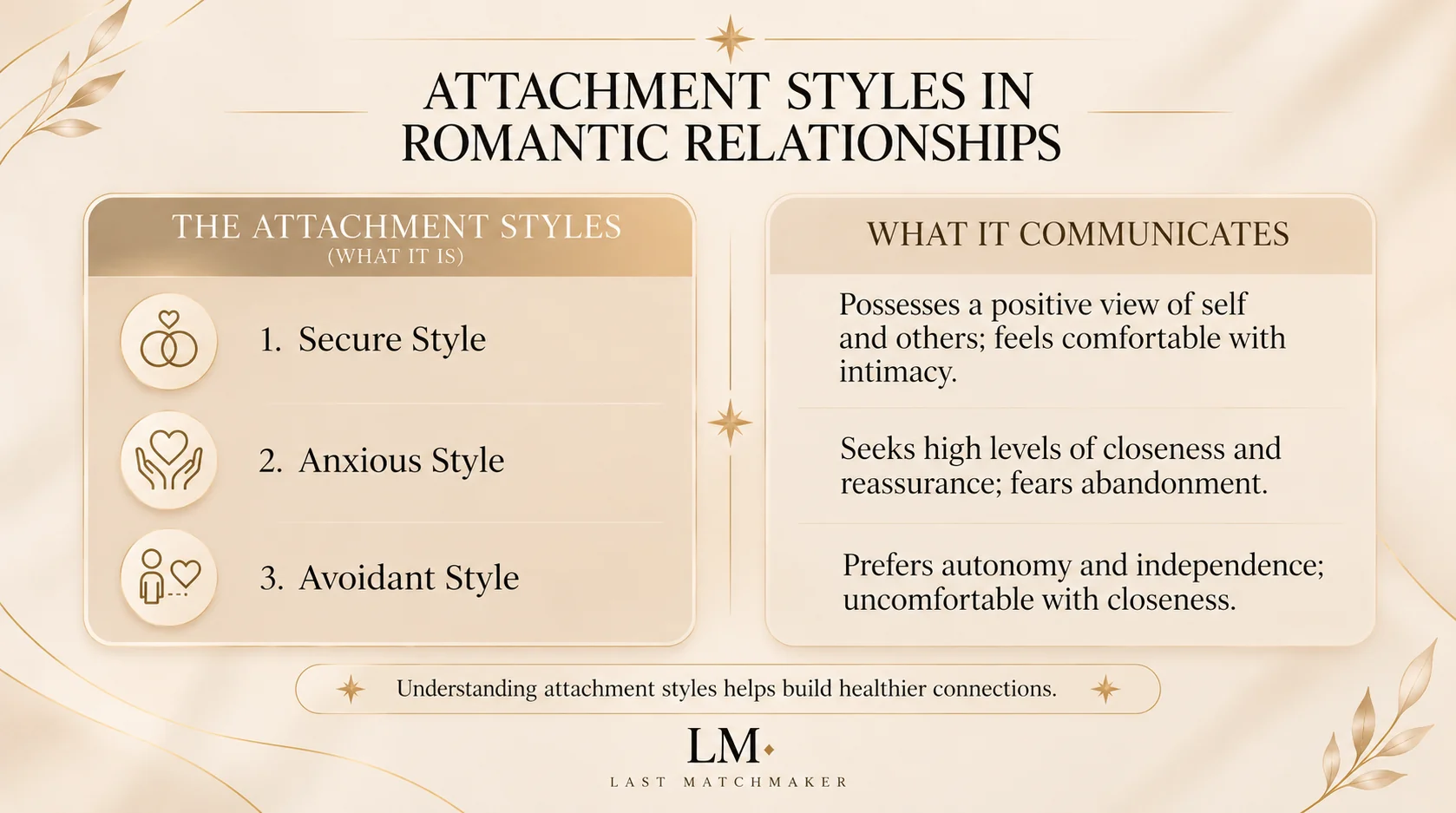
They posit that these theories can influence our relationships in how we handle our feelings toward sex, how we work through relationship conflicts, and our overall beliefs of idealistic intimacy.
For example, individuals with anxious attachment styles tend to be insecure as to where they stand in a relationship, are terrified of abandonment, and often seek reassurance and validation.
Individuals with avoidance styles have a fundamental need to feel loved but are principally emotionally unattainable in their relations.
Lastly, a secure style individual is comfortable giving and receiving love, is open to trusting others and; can also be trusted, and is readily able to get close to others.
Understanding where you may fall in these attachment styles can give you a better understanding of your earlier caregiving years, expectations of others, and what you have grown to know as normal and healthy. Once we have a better understanding of ourselves and how we started out, transformation can begin if necessary.
And while the secure individual may have an easier time experiencing successful relationships, this doesn’t mean that they are “doomed” if they were not provided with the ideal caregiving early on.
Also, if an individual is matched with someone who may be anxious, this also doesn’t necessarily imply that the relationship will fail. It simply means that there is work to be done and the secure individual can guide the anxious individual, sometimes with the help of a professional, into a fruitful relationship.
How Childhood Experiences Shape Trust in Relationships
A more superficial explanation as why we may tolerate the same toxic cycle in our relationships is that we are the most comfortable in what we have learned and what we already know - our memories are imprinted in our environmental experiences and through interactions with others, also referred to as learned behavior.
One common and recurring dynamic that hurts a relationship is a lack of trust, which may have begun from early childhood years in which a caregiver or another individual who you felt could trust, somehow let you down. Perhaps you felt betrayed, your needs were steadily dismissed, or you felt abandoned in some manner.
When you are taught at an early age to mistrust, this can set you up to “test” a partner to see if they will stay.
There are detrimental consequences in this testing process; you may hold back emotionally, create walls by refusing to need anyone, and often questioning your partner’s motives.
This lack of trust will manifest into suspicion that isn’t necessarily balanced, and thus create emotional exhaustion for both individuals.
When there is a lack of trust in a relationship, a basic ingredient to a successful partnership, there will be emotional and physical suffering and the bond between two people will have a lesser chance of surviving.
There have been cases in which unfaithfulness in a relationship has arisen, and should an individual already struggle with trust, this can be difficult to overcome, but not impossible.
Narcissistic Behavior in Romantic Relationships
What is narcissistic behavior and how does it manifest in a relationship? The clinical diagnosis for Narcissistic Personality Disorder (NPD) marks rampant patterns of grandiosity, an endless need for admiration and a lack of empathy for others.
Furthermore, individuals with NPD often display an exaggerated sense of self-importance, illusions of unlimited success or power and a tendency to abuse interpersonal relationships to achieve their goals.
Narcissistic behavior lives on a spectrum, meaning that many individuals may exhibit traits (I would say this the case with most individuals), conversely, extreme narcissism may involve emotional abuse and control, and thus leading to NPD.
Characteristics of toxic dynamics due to narcissistic behaviors may include manipulation, gaslighting, and emotional exploitation.
A less harmful example of narcissistic behavior in a relationship could be – a partner that exaggerates the effort they put into a romantic gesture.
However, certain behaviors are detrimental when they develop into a pattern... An extreme example is crossing boundaries with little guilt, such as a partner having an affair and lying to cover up the behavior so that they can continue without consequences.
Does Narcissism Look Different in Men and Women?
Do narcissistic behaviors show up differently based on gender? The answer may be yes, but there is no direct research of a gender preference when determining whether men are more prone to exhibiting narcissistic behaviors over women.
For example, when we imagine narcissism, it’s easy to stereotype a male-dominated trait (boastful, arrogant, masculine norms). However, psychological research claims that narcissism is more multifaceted than that.
While it may be true that men score higher on certain narcissistic traits, women are just as susceptible and may be flying under the radar – the variant is that it just may look different for everyone.
While most of us are familiar with grandiose narcissism (outward confident, self-important, status-seeking, and most often charismatic) there is also vulnerable narcissism, which is palpable by emotional hypersensitivity, insecurity, anxiety and a silent sense of privilege.
What both traits have in common is an ‘antagonistic core’ – a confidence in one’s own uniqueness, a readiness to misuse others and a frail self-esteem that doesn’t cope well with criticism.
Dr. Ava Green (St. George’s University of London and expert on narcissism in women) tells her students “the best way to gauge how narcissistic someone is - criticize them.” A harsh overreaction can be a fundamental sign.
Vulnerable narcissism is often overlooked. In women, it is considerably linked with psychological, physical and even sexual aggression towards their partners.
Emotional Abuse, Power, and Control in Relationships
Emotional abuse is not just one moment or a heated argument – the key constituent is power and control, designed to shame, humiliate, blame or frighten a partner.
Therapy can help, but only under certain conditions. There cannot be coercive control in couple’s therapy. For example, an abusive partner may use this space to manipulate or regain power.
Additionally, couples therapy may not be appropriate if one partner doesn’t feel safe speaking openly due to the backlash they may experience after therapy, if one or both partners are dishonest or defend their bad behavior, or if one partner is adamant that the relationship is over.
Recognizing Unhealthy Patterns and Setting Boundaries
One simple question that we can ask ourselves is “does my partner make me feel special, secure, and safe?” I am not suggesting that relationships don’t have moments in which one may make the other feel badly. I am speaking of general feelings of love and safety being intact.
If the answer is “I do not feel any of the above,” then you need to ask yourself why? Don’t always point your finger at the other person but look at yourself as well.
You may be surprised to learn that withholding love is also considered an extremely destructive type of emotional abuse. This is when someone refuses to listen, communicate or celebrate in one’s good prosperity as punishment.
They intentionally ignore what their partner needs or wants (which is not necessarily denying affection). Withholding love is more about control and power over another individual.
Not one individual is exempt from growing and improving themselves, and yet we are made up of various complexities that can get tangled up along the way, preventing us from being our best or treating others with kindness.
Awareness is a first step to change and once we can recognize unhealthy patterns, this is when the real work begins. Setting boundaries in a toxic relationship is difficult, especially if we are “people pleasers.”
Setting boundaries include honoring your worth, which ultimately boils down to self-respect; trying not to blame others, but rather using statements such as “I don’t feel like I am being heard;” being clear and intentional about your boundaries and enforcing consequences.
These are just a few examples of setting boundaries. They take practice and certainly don’t happen overnight.
Recognizing Abuse and Moving Toward Healthier Relationships
A phrase that I often have used is, “abuse is abuse, and there’s no excuse.” So often people cannot recognize that they are in an abusive relationship until they are free of them.
Anyone can fall prey to abuse - it has nothing to do with how intelligent a person is. This is why one must ask themself, “how does this person make me feel?”
Relationships are never perfect, but if both parties are willing to put in the challenging and tough work, love never fails.

